



Over 8.5 million people in Taiwan are living with the "ThreeHighs"—hyperglycemia, hyperlipidemia, and hypertension, including approximately 3.2 million people with diabetes. The associated complications pose long-term challenges to both public health and the National Health Insurance (NHI) system.
To strengthen the tiered management of chronic diseases, the National Health Insurance Administration (NHIA) commissioned a team from Taipei Medical University (TMU) to develop a diabetes risk assessment model tailored to the Taiwanese population. Based on the Diabetes Complications Severity Index (DCSI), the TMU team collaborated with the National Health Research Institutes to establish this model. It also forms an industry–government–academia collaboration framework, ensuring that the model design is grounded in clinical evidence.
By integrating personal medical records with DCSI assessment results, the NHIA applies a generative AI model to provide personalized health education.
- For the Public: Diabetes risk stratification and health education reminders will be available through My Health Bank, helping individuals better understand their health risks and strengthen self-management.
- For Healthcare Providers: The Family Physician Platform integrates overall risk assessment results and DCSI information to provide recommendations for complication prevention and care, serving as a clinical decision-support reference for physicians.
Furthermore, building on this model, the NHIA partnered with four professional associations—the Diabetes Association of the Republic of China (Taiwan), the Taiwanese Association of Diabetes Educators, the Taiwan Association of Clinical Diabetes, and the Taiwan Association of Family Medicine—to launch a pilot project on "Diabetes Risk Assessment and Smart Health Education." The initiative aims to strengthen chronic disease management and primary care quality.
The results were announced at the "Google's 20 Years in Taiwan: AI-Guided Smart Health" event. A total of 40 clinics across Taiwan participated in the project, including 7 from the north, 29 from central Taiwan, and 4 from the south. With technical support from Google and the Digital Humanitarian Association, the project ensures diverse participation across different regions and primary care settings.
Director-General Liang-Yu Chen emphasized that the NHIA has accumulated valuable NHI data over the past 31 years. The NHI IC card was introduced in 2004, followed by the launch of MediCloud in 2013. By collaborating with professional associations and leveraging Google's AI technology, the NHIA had leveraged Google's AI technology to empower the public with access to their own health data and personalized health education information. At the same time, the NHIA remain committed to the principles of keeping data within the agency and ensuring minimal data usage. This initiative marks a milestone for precision health education.
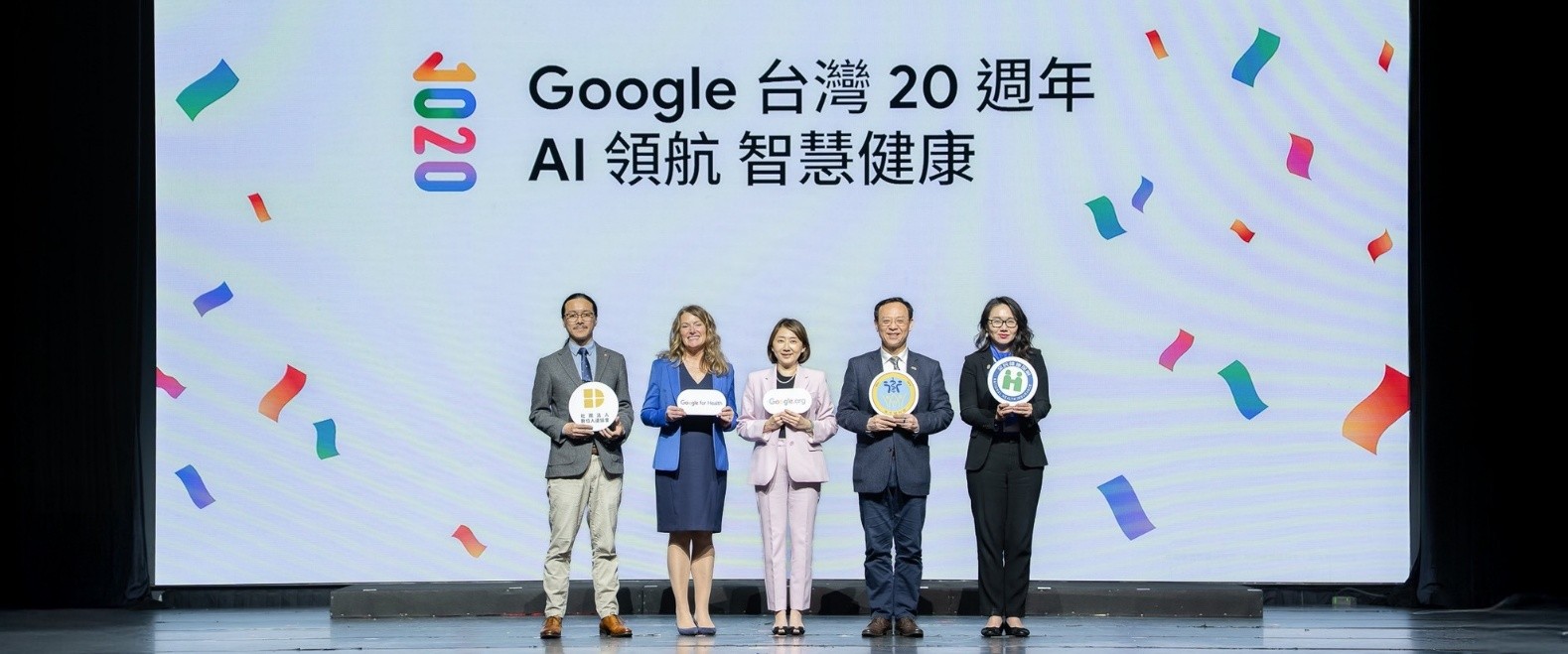 ▲Fig. 1: MOHW Minister Chung-Liang Shih (second from the right) and NHIA Director General Liang-Yu Chen (first from the right) attend the "Google's 20 Years in Taiwan: AI-Guided Smart Health" event on March 4, 2026.
 ▲Fig. 2: A group photo of distinguished guests at the "Google's 20 Years in Taiwan: AI-Guided Smart Health" event held on March 4, 2026.