



To strengthen blood cholesterol management in high-risk patients with atherosclerotic cardiovascular disease (ASCVD), and align with the "888 Program" for Chronic Disease Management, the National Health Insurance Administration (NHIA) launched the "Hyperlipidemia Healthcare Reimbursement Improvement Project" on January 1, 2026. A total of NT$113 million has been allocated to the project, which is expected to benefit approximately 34,000 patients.
The NHIA stated that heart disease and cerebrovascular disease rank second and fourth among the top ten leading causes of death in Taiwan, respectively. According to statistics, 628,000 patients with ischemic heart disease and 466,000 patients with cerebrovascular disease sought medical care in 2024, with associated healthcare expenses reached 46.9 billion points. These figures underscore that cardiovascular disease prevention is a matter of critical urgency.
On May 12, the NHIA held a press conference alongside Taiwanese medical experts and research teams to showcase the progress of their interdisciplinary collaboration in developing an ASCVD integrated care model that aligns with international trends. Director General Lian-Yu Chen of the NHIA pointed out that to improve the quality of care for high-risk ASCVD patients, the NHIA has partnered with nine major medical associations in Taiwan since 2023 to establish the ASCVD Prevention Network. Through this public-private partnership (PPP) a Memorandum of Understanding (MOU) was signed, leading to the completing the "ASCVD Risk Classification" and the "Consensus on Clinical Pathway of Blood Cholesterol Management in Taiwan," thereby establishing an evidence-based clinical care framework.
Statistics data revealed that only 34% of ASCVD patients achieved their blood cholesterol management goal (LDL-C<70 mg/dL) within one year after disease onset, indicating that the lipid panel screening rate still has room for improvement. Director General Chen further specified that the "Hyperlipidemia Healthcare Reimbursement Improvement Project" primarily targets ASCVD patients who have been discharged after a new acute hospitalization, and are assessed by physicians as "extremely high-risk" or "very high-risk". By utilizing the clinical pathway of blood cholesterol management, the initiative aims to establish a comprehensive care model and individualized LDL-C treatment targets, thereby promoting long-term disease control, preventing the cardiovascular events or recurrence, and reducing unnecessary healthcare expenditures. To date, 76 contracted hospitals have been approved for pilot implementation. The project is expected to provide timely and effective treatment for an increasing number of high-risk cardiovascular patients.
Additionally, the NHIA continues to drive digital healthcare initiatives. The Family Physician Platform now features the ASCVD Risk Classification function, while My Health Bank feature within the NHI App enables personalized risk assessments and health education. These measures aim to improve health literacy, support self-management, and collectively enhance chronic disease care quality, ultimately building a more resilient cardiovascular disease prevention network in Taiwan.
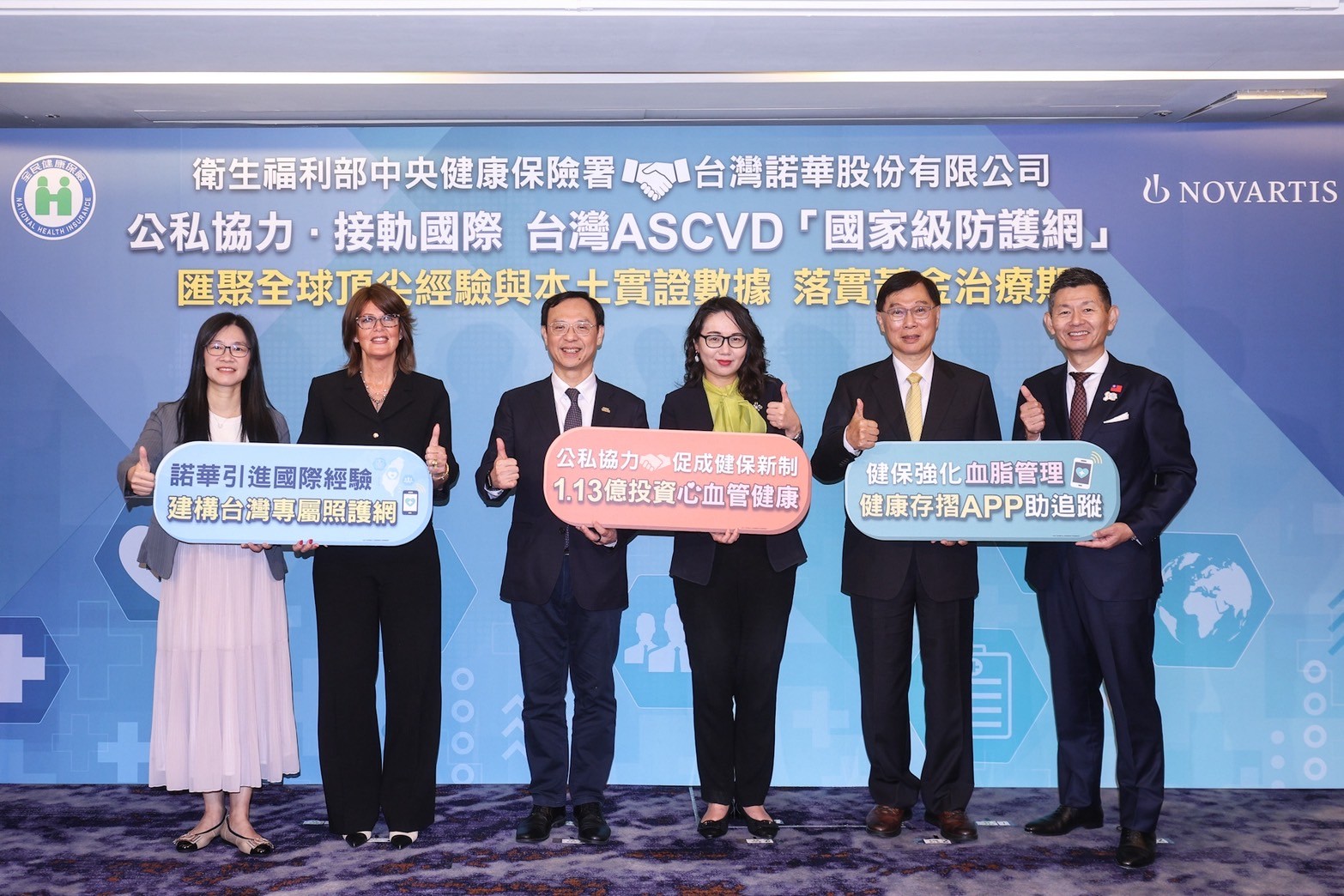 ▲Fig. 1: On May 12, 2026 "ASCVD MOU Progress Press Conference" was held. Attendees included Minister of Health and Welfare Chung-Liang Shih (center left), NHIA Director General Lian-Yu Chen (center right), President Judith Love of Novartis APMA (second left), President Keizo Miyazawa of Novartis Taiwan (far right), President Wen-Jone Chen of Missioncare (second right), and Professor Fei-Yuan Hsiao of the Graduate Institute of Clinical Pharmacy of National Taiwan University (far left).
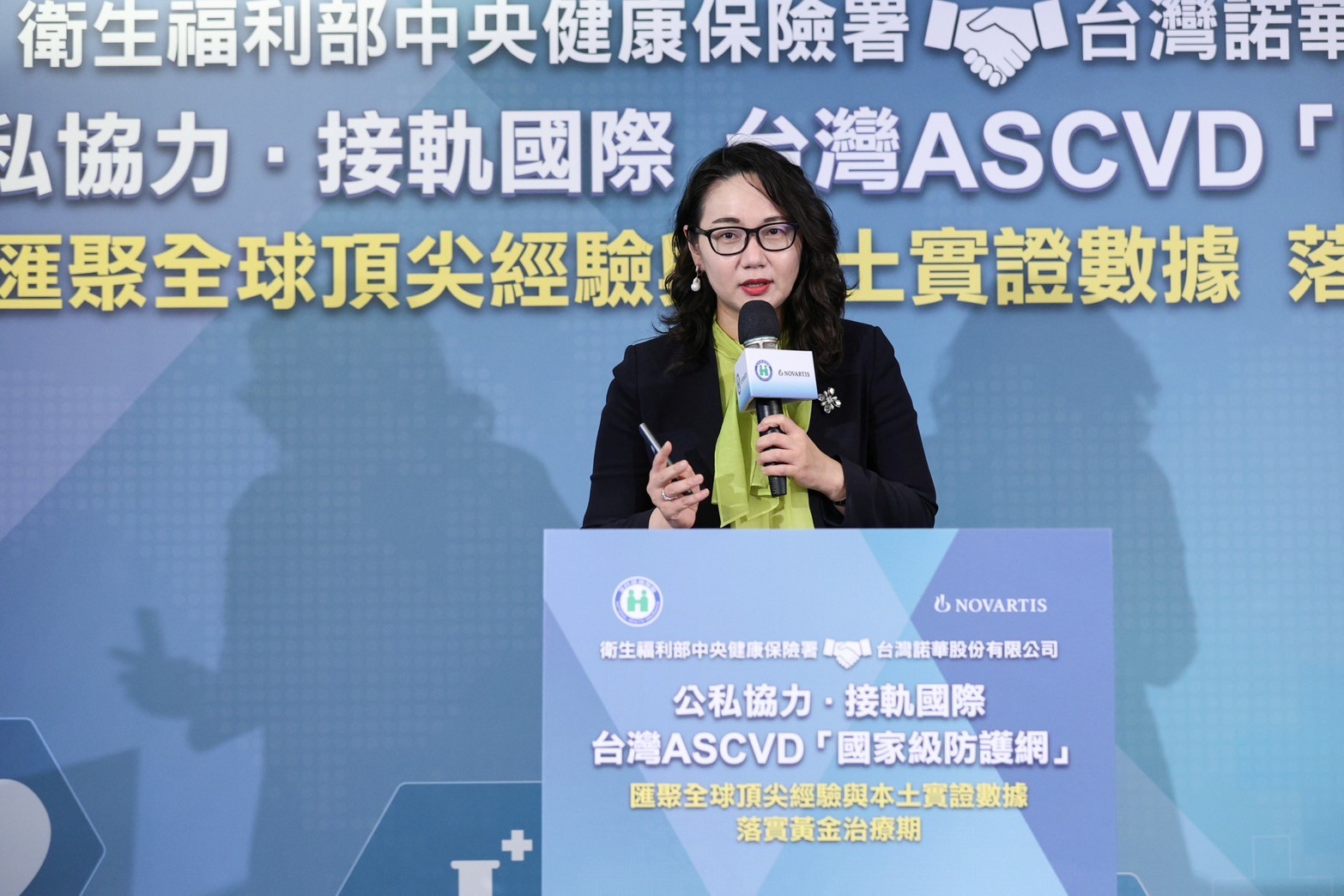 ▲Fig. 2: Director General Chen shares the implementation progress of the ASCVD Prevention Network at the press conference.