



On September 8, 2026, the National Health Insurance Administration (NHIA), Ministry of Health and Welfare, hosted the "APEC Conference on Harnessing AI for Resilient and Inclusive Health Systems" in Tainan City. The conference brought together representatives from APEC economies and international experts to exchange experiences and explore how artificial intelligence (AI) can contribute to health care governance, promote health equity, and address emerging challenges associated with population aging and increasing health care demands. Through interactive discussions and the sharing of global trends and evidence-based practices, the conference aimed to enhance policy adaptability and promote the well-being of people toward sustainable health systems.
Representatives from nine APEC economies, including Indonesia, Japan, the Republic of Korea, Malaysia, New Zealand, Singapore, Thailand, the United States, and Viet Nam, participated in the conference. Distinguished international experts were invited to share their insights, including Professor Eric C. Strain, the George E. Bigelow Professor and Director of the Behavioral Pharmacology Research Unit at the Johns Hopkins University School of Medicine; Masahiro Hashimoto, Deputy Director of the Ministry of Health, Labour and Welfare, Japan; Dr. Nor Fariza Ngah, Deputy Director-General of Health, Ministry of Health Malaysia; Dr. Robyn Whittaker, Clinical Director of the Health New Zealand; Dr. Andrew Epaphroditus Tay, Chief Wellbeing Officer of the National University of Singapore; and Dr. Boonchai Kijsanayotin, Chair of the Asia eHealth Information Network (AeHIN). Industry representatives, including Ted Chang, Chief Technology Officer of Quanta Computer; James Liu, Vice President of Microsoft Taiwan Corporation; and Tony Lee, Industry Lead, APAC Top Partner Team, Google APAC, also shared their experiences in promoting innovative AI applications. More than 100 experts from the health care and technology sectors participated in the conference.
In her opening remarks, NHIA Director-General Dr. Lian-Yu Chen emphasized that countries worldwide are facing common challenges, including population aging, the growing burden of chronic diseases, and increasing demand for health care services. Under conditions of limited health care workforce and constrained resources, maintaining quality of care while improving service efficiency has become a key priority for health systems. The adoption of AI technologies can support clinical diagnosis, facilitate personalized treatment decisions, and optimize administrative processes, thereby reducing the burden on health care professionals and enhancing patient-centered care.
The conference also showcased the achievements of digital transformation under the National Health Insurance (NHI) system. Key milestones include the nationwide implementation of the NHI Card in 2004, the establishment of the MediCloud system in 2013, the launch of My Health Bank in 2014, the pilot implementation of the Virtual IC Card in 2019 and its expanded application since 2022, the promotion of the Primary Care Program and related digital platforms in 2024, and the expansion of telemedicine services since August 2025. These initiatives have gradually built a more comprehensive and people-centered digital health ecosystem.
The NHIA will continue advancing digital transformation by strengthening digital health infrastructure and integrating diverse health-related data, including NHI claims data, clinical care information, laboratory results, medical imaging data, and patient-generated health data. These efforts not only enable people to better understand and manage their own health conditions in a timely manner, but also facilitate the development of AI-assisted tools to enhance self-management capacity, continuity of care, and accessibility of health services.
Furthermore, the NHIA has leveraged big data analytics and AI technologies to develop innovative applications, including risk prediction models, risk stratification, case management, and risk-oriented care approaches for diabetes and cardiovascular diseases. By applying technology-enabled solutions, the NHIA aims to strengthen disease prevention and improve health care effectiveness, gradually building a data-driven and people-centered smart health care model. Looking ahead, the NHIA will continue utilizing the advantages of NHI big data and digital technologies to enhance health management and integrated care for patients with chronic diseases, including hypertension, hyperglycemia, and hyperlipidemia, and to promote precision prevention and early intervention.
APEC serves as an important platform for strengthening international cooperation and exchange. The NHIA actively shares its experience in health insurance, smart health care, and digital governance with member economies, enhancing the international visibility of its achievements in these areas. Building on these partnerships, the NHIA will continue to promote innovation and sustainable development of health care systems across the Asia-Pacific region.

▲Photo 1. Dr. Lian-Yu Chen, Director-General of the National Health Insurance Administration, Ministry of Health and Welfare, delivered the opening remarks at the "APEC Conference on Harnessing AI for Resilient and Inclusive Health Systems" on September 8, 2026.

▲Photo 2. Professor Emeritus Jyh-Hong Chen of National Cheng Kung University, Moderator of Plenary 1, "AI Governance in Healthcare: Policy Alignment and Cross-Sector Collaboration," at the "APEC Conference on Harnessing AI for Resilient and Inclusive Health Systems" on September 8, 2026.
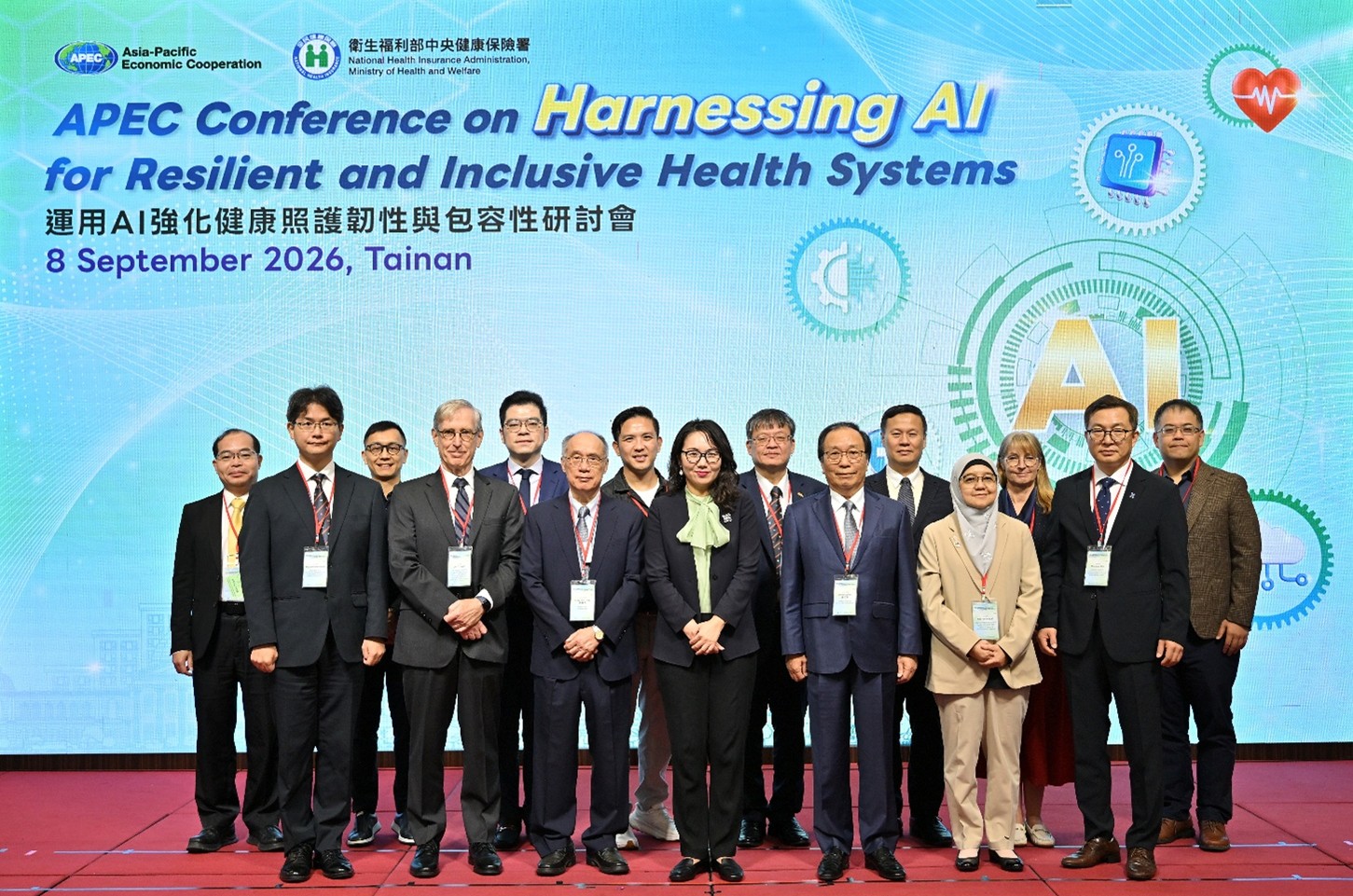
▲Photo 3. Group photo featuring Director-General Lian-Yu Chen of the NHIA (center), Professor Emeritus Jyh-Hong Chen of National Cheng Kung University (3rd from right), Academician Kung-Yee Liang of Academia Sinica (3rd from left), Professor Eric C. Strain of Johns Hopkins University School of Medicine (2nd from left), and distinguished international speakers.
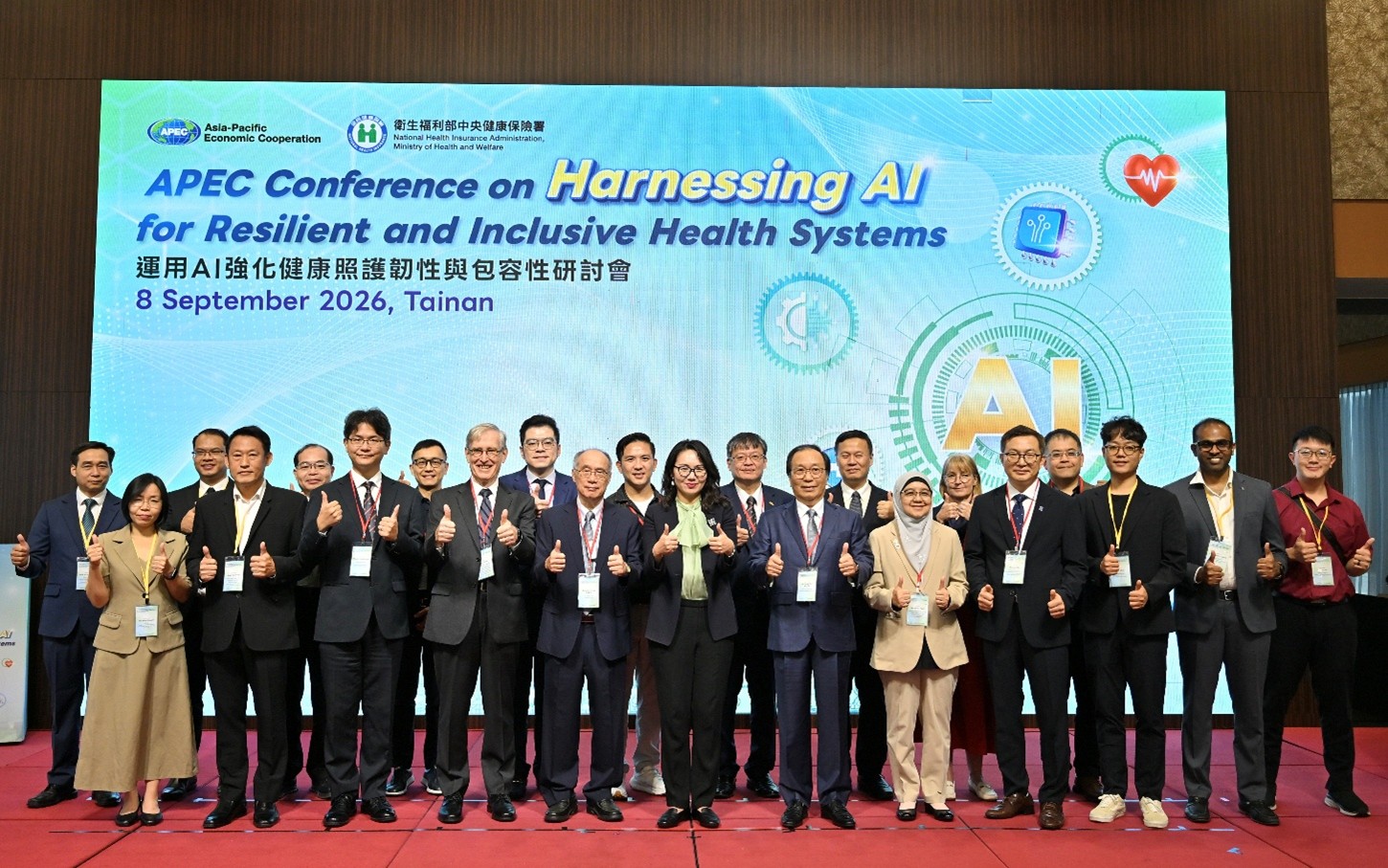
▲Photo 4. Group photo featuring Director-General Lian-Yu Chen of the NHIA (center), Professor Emeritus Jyh-Hong Chen of National Cheng Kung University (3rd from right), Academician Kung-Yee Liang of Academia Sinica (3rd from left), distinguished international speakers, and representatives from nine APEC economies.
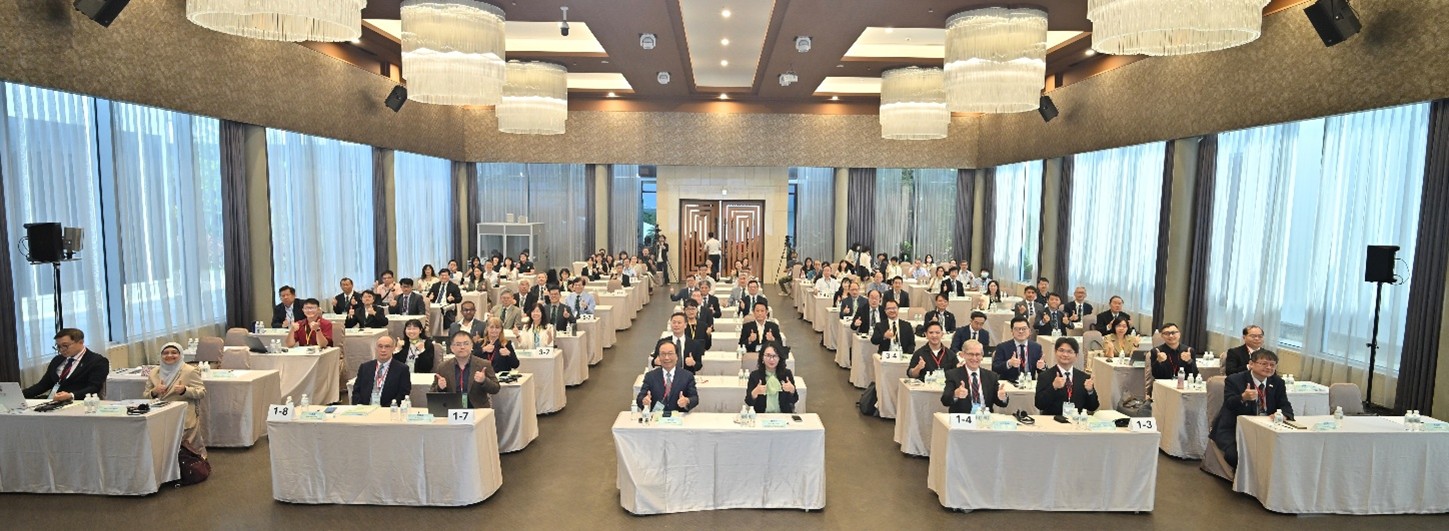
▲Photo 5. Group photo of all distinguished guests and participants at the "APEC Conference on Harnessing AI for Resilient and Inclusive Health Systems."