



In response to the increasing healthcare needs of a super-aged society, the National Health Insurance Administration (NHIA) is implementing the NHI Rehabilitation Ward Pilot Program to strengthen the post-acute rehabilitation care system. The NHIA has allocated around NT$300 million this year to support the program, with ten participating hospitals providing intensive inpatient rehabilitation care to approximately 1,600 patients with rehabilitation potential. Aiming at functional recovery and independent living, multidisciplinary teams incorporate simulated home environments into intensive inpatient rehabilitation to help patients regain the skills needed to return home and re-engage with daily life.
Premier Jung-Tai Cho, accompanied by Deputy Minister Jen-Der Lue of the Ministry of Health and Welfare (MOHW) and NHIA Director General Lian-Yu Chen, attended the NHI Rehabilitation Ward Pilot Program Demonstration and Press Conference at Taichung Hospital on August 23. Premier Cho visited the rehabilitation ward and focused on the program's implementation progress.
Health Is Not an Expense but an Investment: Reducing Disability Is the Key
Premier Cho stated that Taiwan has entered a super-aged society. Through the Healthy Taiwan initiative, the government aims to shift the focus of health policy from disease treatment to restoring health, and from caring for disability to prevention, delaying, and reducing disability, thereby extending healthy life expectancy in Taiwan.
Premier Cho emphasized: "Health is not an expense but an investment." Helping patients regain function not only reduces the caregiving burden on families but also enables them to remain socially engaged. He further underscored that "rehabilitation is not the final stage of healthcare but a critical starting point for a patient returning to daily life and for the government to reduce disability." The government will continue to integrate healthcare, rehabilitation, and long-term care resources to help people live longer, healthier lives with independence and dignity.
Five Key Rehabilitation Features Help Patients Regain Independence: Over 90% of Patients Successfully Return Home
Taichung Hospital Superintendent Yuan-De Huang stated that the hospital has developed five key features based on a patient-centered approach: multidisciplinary rehabilitation, rehabilitation throughout the day, home-like rehabilitation training, integrated care, and one-stop services. Through multidisciplinary care, rehabilitation training, daily life training, and follow-up services, the hospital supports patients' journey from acute care and intensive rehabilitation to a successful return home. Under its post-acute rehabilitation care program, 91.9% of patients have successfully returned home, demonstrating the remarkable results of intensive rehabilitation and seamless continuity of care.
Strengthening Inpatient Rehabilitation under the NHI
Deputy Minister Lue pointed out that, since 2020, Taichung Hospital has accumulated years of practical experience through both its participation in the "Pilot Program for Rehabilitation Healthcare in Response to Population Aging" and the implementation of its forward-looking Rehabilitation Ward. Under the NHI Rehabilitation Ward Pilot Program, the Hospital will strengthen its inpatient rehabilitation care system, quality management, and care processes. In addition, the Hospital will continue to refine the program and develop a sustainable and replicable inpatient rehabilitation care model for Taiwan.
Helping Patients Relearn Activities of Daily Living
Director General Chen described the rehabilitation wards as "rehabilitation schools," where patients receive rehabilitation while relearning activities of daily living (ADLs). With support from multidisciplinary teams and training in simulated home environments, ADLs such as standing, walking, using the bathroom, dressing, and eating are incorporated into inpatient rehabilitation. She emphasized that "the benefits of rehabilitation should extend beyond the therapy room, allowing patients to carry their rehabilitation gains home and apply them in daily life."
The NHIA noted that the pilot program marks its first introduction of a rehabilitation ward model inspired by Japan's Kokura Hospital. Under the program, patients receive two to five hours of intensive rehabilitation daily to support functional recovery. In the future, the NHIA will continue to refine the reimbursement scheme and strengthen continuity of care based on the outcomes of the pilot program. The goal is to gradually develop a sustainable and replicable inpatient rehabilitation model that helps patients successfully return to daily life and the workplace.
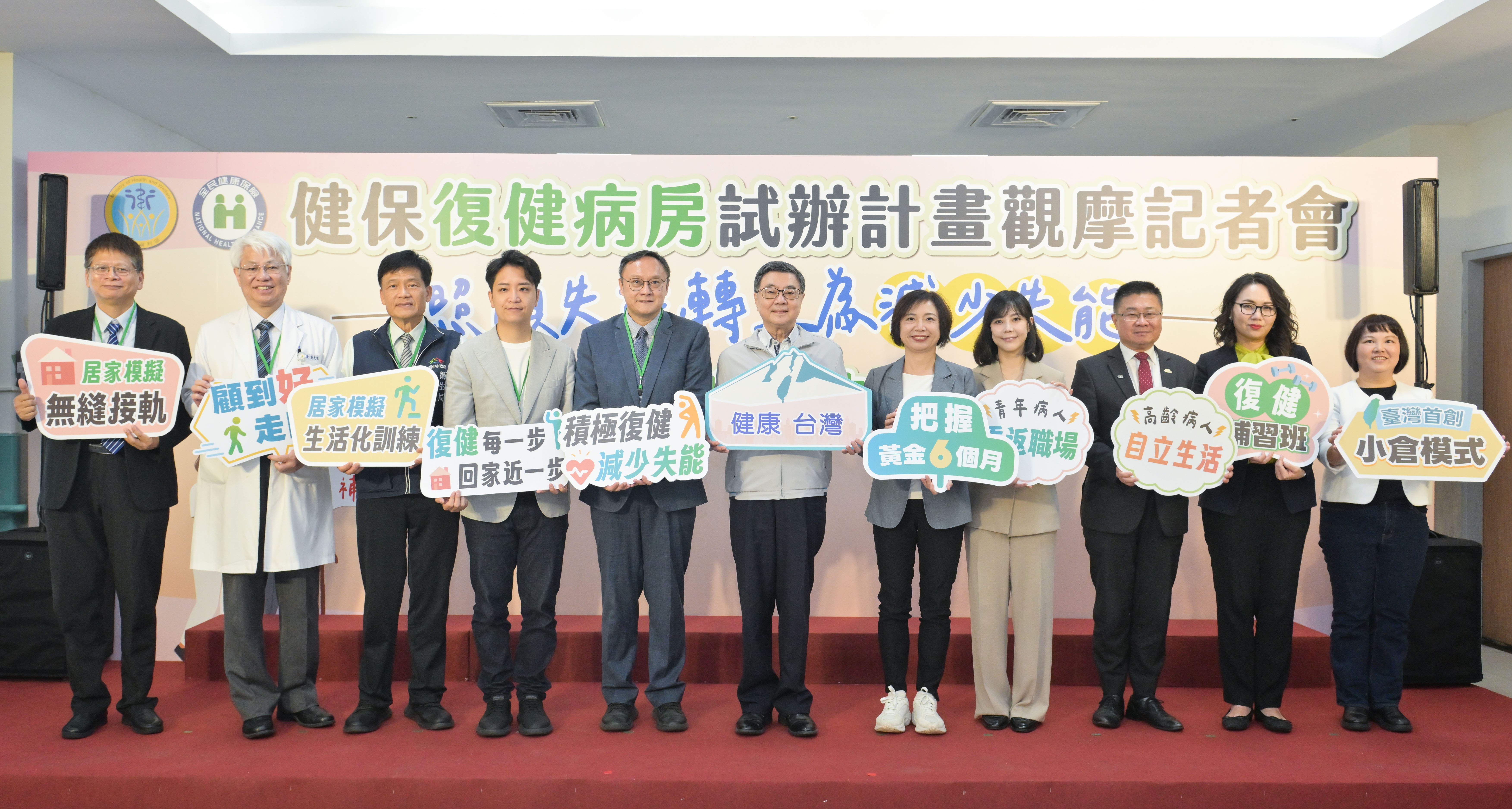
▲Fig. 1: The NHI Rehabilitation Ward Pilot Program Demonstration and Press Conference was held at Taichung Hospital on August 23, 2026. Premier Jung-Tai Cho (center), Legislator Hsin-Chun Ho (5th from right), Legislator Ting-Wei Lo (4th from left), MOHW Deputy Minister Jen-Der Lue (3rd from right), NHIA Director General Lian-Yu Chen (2nd from right), and Superintendent Yuan-De Huang of Taichung Hospital (2nd from left) attended the press conference to show their support for the rehabilitation ward policy.
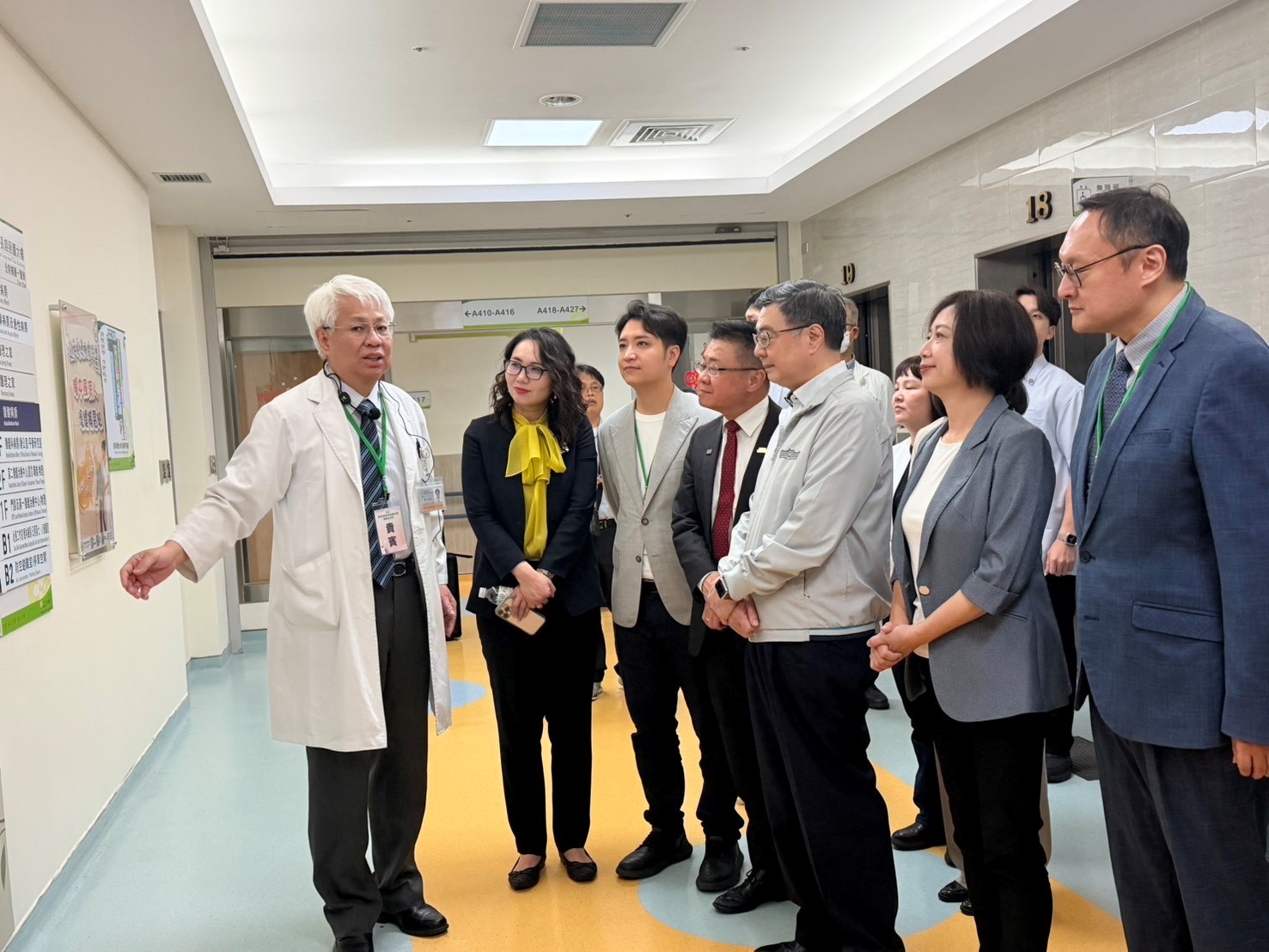
▲Fig. 2: Superintendent Yuan-De Huang of Taichung Hospital introduced the five key rehabilitation features to Premier Jung-Tai Cho (center), accompanied by MOHW Deputy Minister Jen-Der Lue (4th from left) and NHIA Director General Lian-Yu Chen (2nd from left). These features support patients throughout their journey from acute care and intensive rehabilitation to a successful return to daily life.
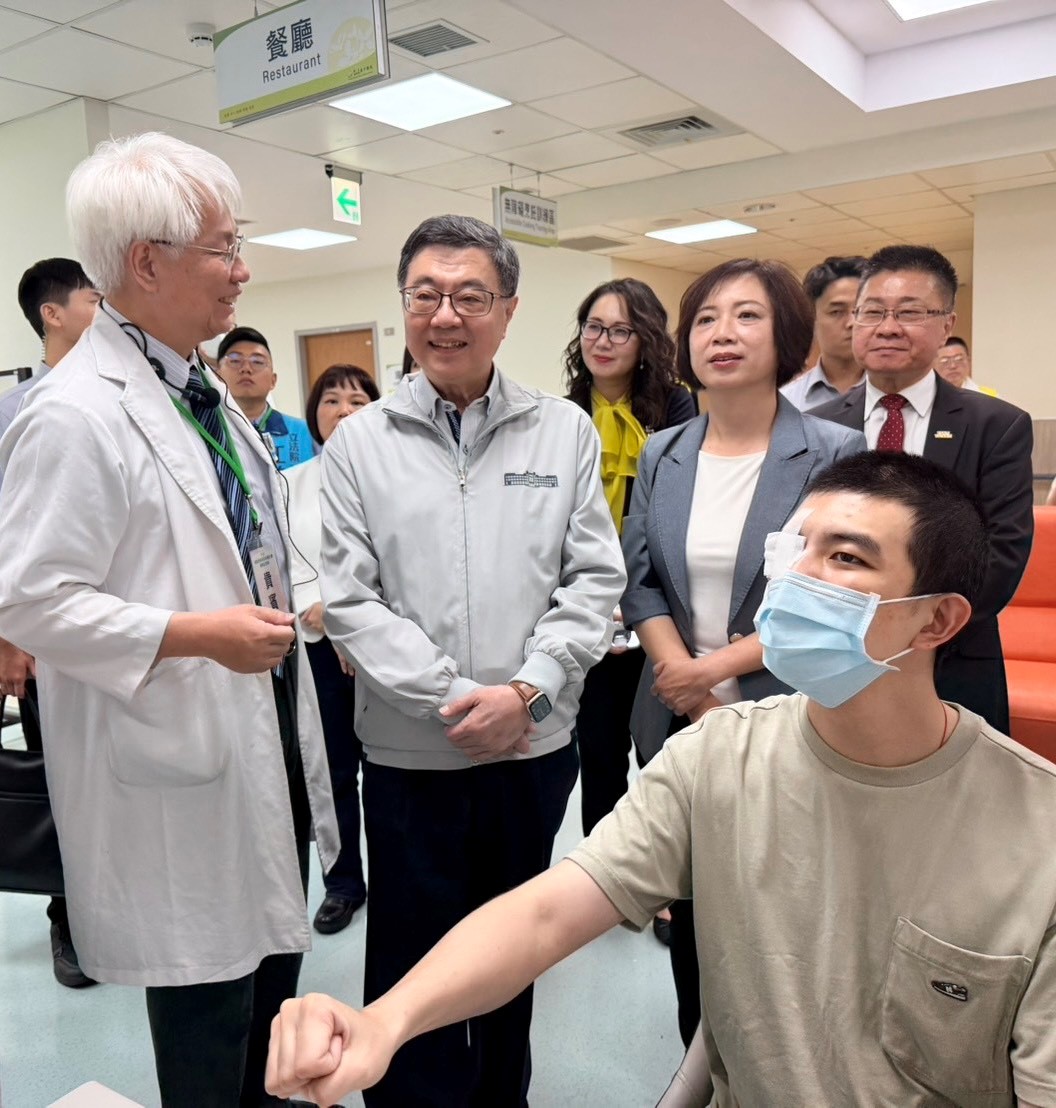
▲Fig. 3: Premier Jung-Tai Cho visited the home environment simulation and ADL training at the rehabilitation ward of Taichung Hospital.